

Check your siding first
Power washing fixes curb appeal fast, but you can't just blast every surface the same way. Before you rent a machine, walk the perimeter. You aren't just looking for dirt; you're looking for where your house is vulnerable.
Start by walking around your house and noting the type of siding you have. Is it vinyl, wood, brick, stucco, or something else? Each material requires a different approach to power washing. Vinyl is relatively durable, but wood can be easily damaged by too much pressure. Brick and stucco are porous and may require gentler cleaning solutions. Look closely for any existing damage – cracked mortar, loose boards, peeling paint. These areas are particularly susceptible to further damage from power washing.
Pay attention to the areas around windows, doors, and landscaping. These are spots where water intrusion can be a problem. Consider how you’ll protect these areas during the cleaning process. Also, think about the overall condition of the paint. If the paint is already failing, power washing could accelerate the peeling process. It’s about setting realistic expectations, and sometimes, the best course of action is not to power wash.
Finally, consider the source of the dirt and grime. Is it just general atmospheric dirt, or are you dealing with mildew, algae, or stubborn oil stains? Knowing the type of grime will help you choose the right cleaning solutions. A little preparation can save you a lot of headaches – and potential damage – down the road.

Gas vs. electric machines
Choosing the right pressure washer is a critical first step. The two main types are gas-powered and electric, and each has its strengths and weaknesses. It’s tempting to just go for the most powerful machine, but that’s often not the best approach. The ideal choice depends on the size of your home, the frequency of cleaning, and your tolerance for noise and maintenance.
Gas-powered pressure washers are generally more powerful, delivering higher PSI (pounds per square inch) and GPM (gallons per minute). This makes them ideal for larger homes and for tackling tough cleaning jobs like removing stubborn stains or stripping paint. However, they're also louder, heavier, and require more maintenance – oil changes, spark plug replacements, and fuel stabilization are all part of the ownership experience. A good gas-powered model can easily cost between $300 and $800.
Electric pressure washers, on the other hand, are quieter, lighter, and require less maintenance. They’re perfect for smaller homes and for lighter cleaning tasks like washing siding or decks. While they don’t have the same raw power as gas models, they’re often sufficient for most residential cleaning needs. You can find a decent electric pressure washer for around $150 to $400. The PSI and GPM are lower, typically ranging from 1200-2800 PSI and 1.2-2.0 GPM.
Think about your specific needs. If you have a large property with significant grime buildup, a gas-powered washer is likely the better choice. But if you have a smaller home and only plan to wash it once or twice a year, an electric model will probably suffice. Don’t get caught up in the numbers; consider the practicalities of each type. A pressure washer with 2500 PSI and 2.5 GPM is a solid all-around performer for most homes.
- Gas washers have more power for big jobs but need oil changes and spark plugs.
- Electric-Powered: Quieter, lighter, less maintenance, suitable for smaller homes and lighter tasks.
Gas vs. Electric Pressure Washers: A Comparison
| Criterion | Gas Pressure Washer | Electric Pressure Washer |
|---|---|---|
| Cost (Initial) | Medium to High | Low to Medium |
| Portability | Medium | High |
| Power (PSI/GPM) | High | Medium |
| Noise Level | High | Low |
| Maintenance | High | Low |
| Environmental Impact | Higher | Lower |
| Runtime | Continuous (fuel dependent) | Limited by cord/battery |
| Typical Applications | Large properties, heavy-duty cleaning | Smaller properties, lighter cleaning tasks |
Illustrative comparison based on the article research brief. Verify current pricing, limits, and product details in the official docs before relying on it.
Nozzles and attachments
The wand is only the base. Different nozzles change how the water hits your house, and picking the wrong one is the fastest way to etch permanent stripes into your driveway or strip the paint off your siding.
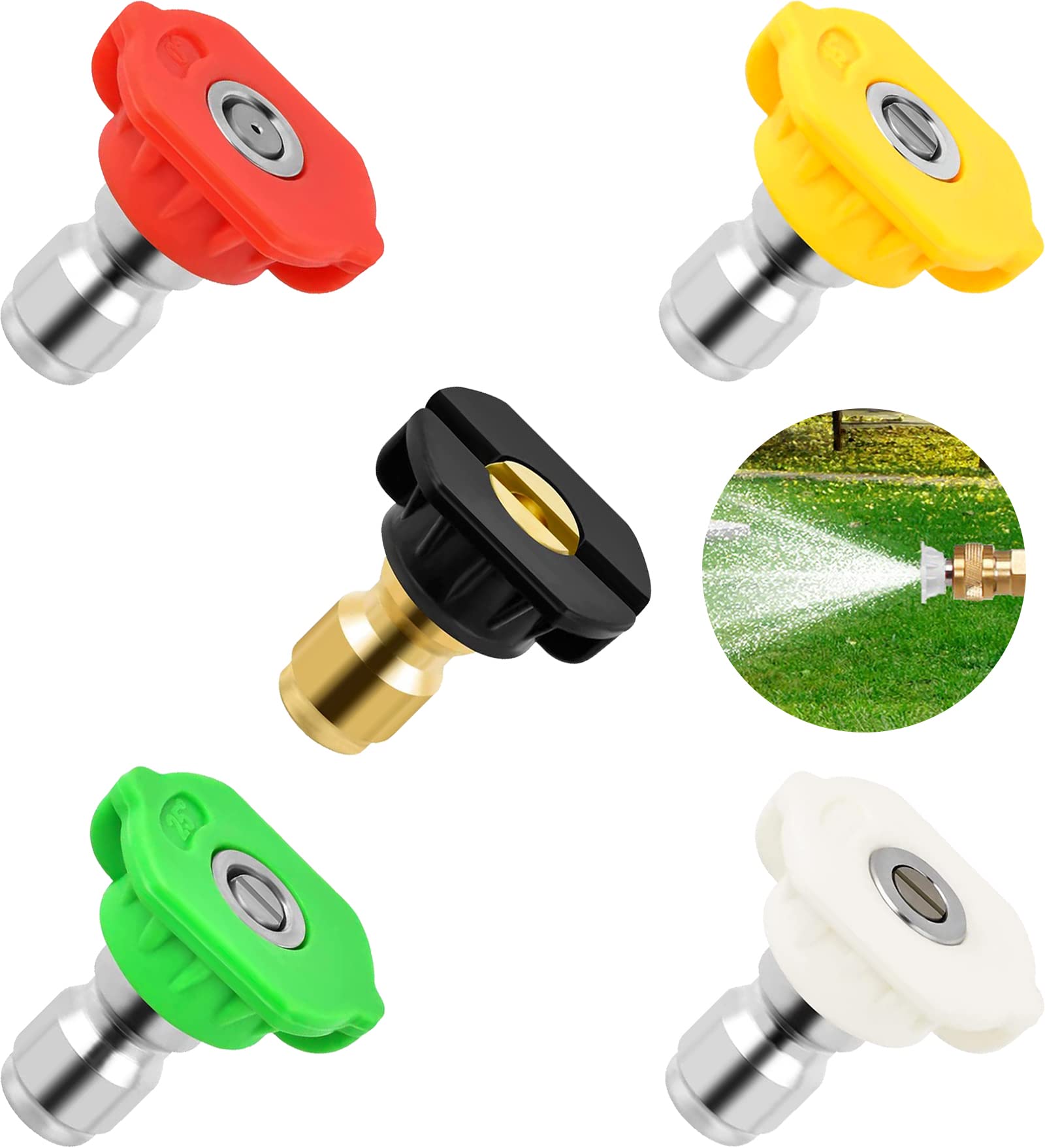
Different nozzle angles create different spray patterns. A 0° nozzle delivers a concentrated stream of water that’s ideal for removing stubborn grime from hard surfaces, but it’s also the most likely to cause damage. A 15° nozzle is good for stripping paint or cleaning concrete, while a 25° nozzle is a good all-purpose option for general cleaning. A 40° nozzle is best for delicate surfaces like vinyl siding. The soap nozzle, typically indicated by a wide fan spray, is used for applying detergents.
Beyond the nozzles, consider attachments like surface cleaners and rotary nozzles. Surface cleaners are designed for cleaning large, flat areas like driveways and patios. They provide a consistent, even spray pattern that prevents streaking. Rotary nozzles, also known as turbo nozzles, combine the power of a 0° nozzle with a rotating action for extra cleaning power. Telescoping wands are useful for reaching high areas without a ladder.
I've seen too many homeowners assume a single nozzle will do everything. That's a recipe for disaster. Always start with a wider angle nozzle and gradually increase the pressure if needed. Test the nozzle on an inconspicuous area first to ensure it doesn't cause any damage. Remember, it's better to start slow and increase pressure than to start too strong and cause irreversible harm.
Cleaning Solutions: What to Use (and Avoid)
Soap matters as much as pressure. I prefer biodegradable cleaners because harsh chemicals can kill your shrubs or eat through siding finishes if you aren't careful.
Biodegradable detergents are a great choice for general cleaning. They’re effective at removing dirt and grime without harming the environment. The Department of General Services in California (dgs.ca.gov) recommends using cleaning solutions that are Green Seal certified, indicating they meet rigorous environmental standards. These certifications ensure the product is less toxic and more sustainable.
Specific types of grime require specific solutions. For mildew and algae, a solution of trisodium phosphate (TSP) can be effective, but it should be used with caution as it can be harmful to the environment. For oil stains, a degreaser specifically designed for concrete is your best bet. Avoid using bleach, as it can damage siding and kill plants. Also, steer clear of abrasive cleaners, as they can scratch surfaces.
Always read the label carefully and follow the manufacturer’s instructions. Dilute the cleaning solution properly and test it on an inconspicuous area before applying it to the entire surface. And remember, less is often more. Using too much cleaning solution can leave a residue that’s difficult to rinse off.
- Biodegradable detergents: Environmentally friendly and effective for general cleaning.
- Trisodium phosphate (TSP): Effective for mildew and algae, use with caution.
- Concrete degreasers: Best for removing oil stains.
- Avoid: Bleach and abrasive cleaners.
Exterior Cleaning Solutions
- Vinyl Siding - General Cleaning: Simple Green All-Purpose Cleaner is effective for removing dirt and mildew. Dilute according to package directions.
- Vinyl Siding - Stubborn Stains: For algae or tough grime, try a vinyl siding cleaner like Zep House Siding, Brick & Concrete Cleaner. Always test in an inconspicuous area first.
- Brick - Mildew Removal: A solution of trisodium phosphate (TSP) and water can tackle mildew on brick. Always wear appropriate safety gear, including gloves and eye protection, when using TSP.
- Brick - Efflorescence: Muriatic acid diluted in water can dissolve efflorescence (white salt deposits). Caution: Muriatic acid is highly corrosive; follow all safety precautions.
- Wood - Gentle Cleaning: Use a wood cleaner specifically designed for exterior use, such as Wolman Wood Brightener. This helps restore wood’s natural color.
- Wood - Mold & Mildew: A mixture of water and bleach (1 part bleach to 3 parts water) can remove mold and mildew from wood surfaces. Rinse thoroughly.
- Concrete - Oil Stains: Degreasers like Krud Kutter Concrete & Driveway Cleaner are designed to lift oil and grease stains from concrete surfaces.
- Concrete - General Cleaning: For general concrete cleaning, a solution of dish soap and water can be effective. For heavier duty cleaning, consider using a concrete cleaner like Quickcrete Concrete Cleaner.
Stay safe and protect the yard
Power washing can be dangerous if not done properly. High-pressure water can cause serious injuries, and improper use of cleaning solutions can be harmful to your health and the environment. Safety should always be your top priority.
Personal protective equipment (PPE) is essential. Always wear safety glasses to protect your eyes from flying debris. Gloves will protect your hands from chemicals and abrasions. Closed-toe shoes are a must to prevent foot injuries. And if you’re using a gas-powered pressure washer, wear hearing protection to prevent hearing damage. A long-sleeved shirt and pants are also recommended.
Protect your landscaping, windows, and other vulnerable areas. Cover plants with plastic sheeting to prevent them from being damaged by the spray. Close and cover windows and doors to prevent water intrusion. Be extremely careful around electrical outlets and power lines. Maintain a safe distance of at least 10 feet from power lines. Electrical shock is a real and potentially fatal hazard.
Proper storage of cleaning solutions is also important. Store them in a cool, dry place out of reach of children and pets. Never mix different cleaning solutions together, as this can create dangerous fumes. And always dispose of empty containers properly. A little caution can go a long way in preventing accidents and ensuring a safe power washing experience.
- Wear safety glasses to block flying debris.
- Gloves: Protect your hands.
- Closed-toe shoes: Prevent foot injuries.
- Hearing protection: For gas-powered washers.
- Cover plants and windows: Protect landscaping and property.
Power Washing Techniques: Siding, Concrete, and More
Different materials require different power washing techniques. Applying the same approach to vinyl siding as you would to brick can lead to damage. Understanding the nuances of each surface is key to achieving a clean result without causing harm. The HUD (hud.gov) guidance on cleaning emphasizes the importance of appropriate methods for different surfaces.
For vinyl siding, use a wide-angle nozzle (40°) and a low-pressure setting. Hold the nozzle at a slight angle and work from top to bottom, overlapping each pass. For brick, you can use a slightly higher pressure setting and a 25° nozzle, but be careful not to damage the mortar. For wood siding, use the lowest possible pressure setting and a wide-angle nozzle. Wood is easily damaged, so proceed with extreme caution.
Concrete is more durable, but it can still be damaged by too much pressure. Use a 25° or 40° nozzle and a moderate pressure setting. For stubborn stains, you can use a concrete degreaser and a rotary nozzle. For stucco, use a wide-angle nozzle and a low-pressure setting. Stucco is porous and can be easily damaged by high pressure.
Always test the pressure and cleaning solution on an inconspicuous area before applying it to the entire surface. Work in sections and rinse thoroughly after each section. And remember, patience is key. It’s better to take your time and do the job right than to rush and cause damage.
Troubleshooting Common Problems
Even with careful preparation, things can sometimes go wrong during power washing. Streaking, uneven cleaning, and damage to surfaces are all potential issues. Knowing how to troubleshoot these problems can save you time, money, and frustration.
Streaking is often caused by using too much pressure or the wrong nozzle. Try reducing the pressure or switching to a wider-angle nozzle. Uneven cleaning can be caused by inconsistent nozzle distance or pressure. Maintain a consistent distance and pressure throughout the cleaning process. If you accidentally damage your siding, stop immediately and assess the damage. You may need to consult a professional for repairs.
If you’re having trouble removing stubborn stains, try using a different cleaning solution or a rotary nozzle. If you’re still having trouble, you may need to repeat the cleaning process. And if you’re unsure about anything, don’t hesitate to consult a professional. It’s better to be safe than sorry.
Remember to always rinse thoroughly after cleaning. This will help remove any remaining dirt, grime, or cleaning solution. And if you notice any damage, address it promptly to prevent it from getting worse. Being prepared for the unexpected is a sign of a smart homeowner.
- Streaking: Reduce pressure or switch to a wider nozzle.
- Uneven cleaning: Maintain consistent distance and pressure.
- Damage to siding: Stop immediately and assess the damage.



No comments yet. Be the first to share your thoughts!